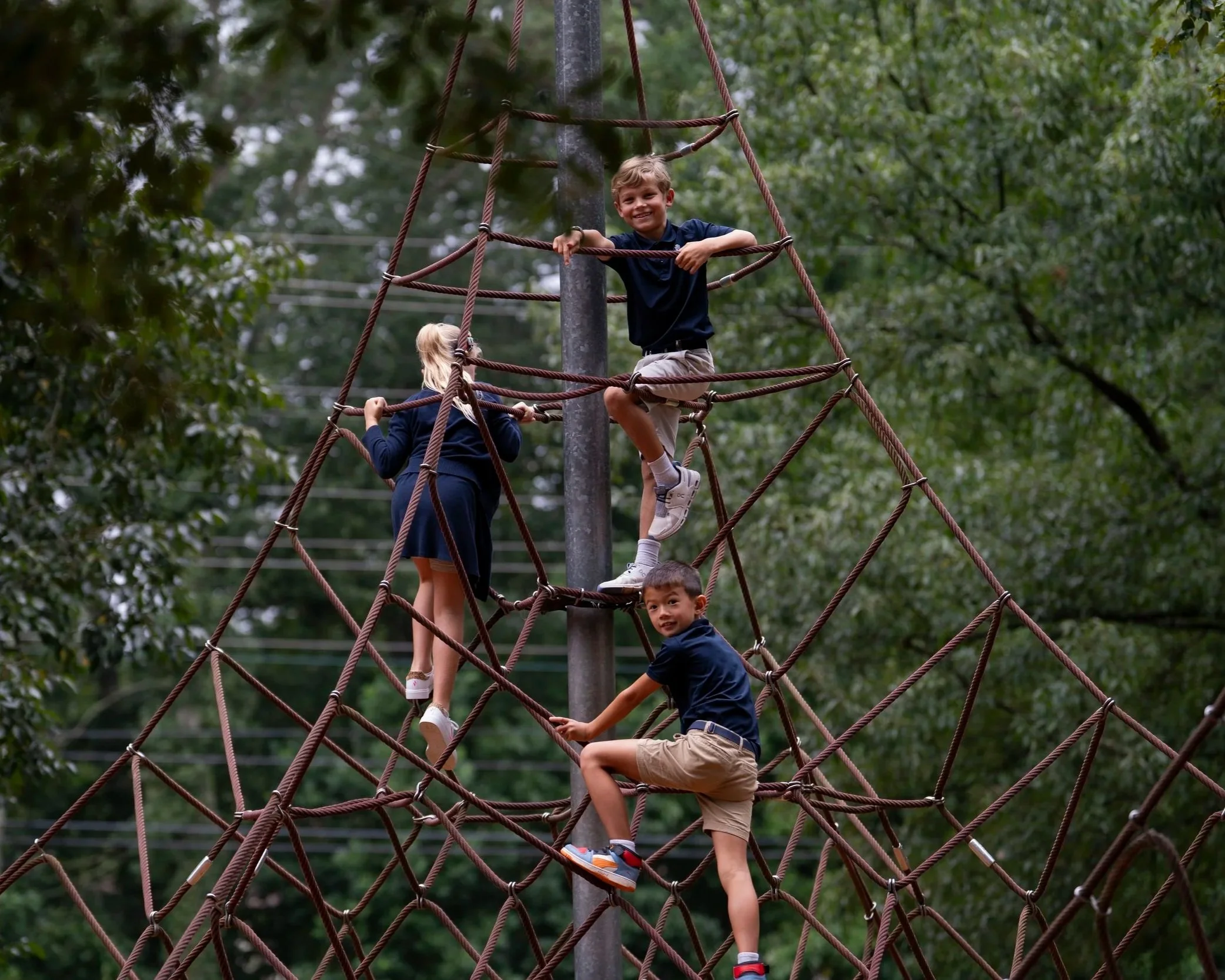
Nourishing Bodies and Souls
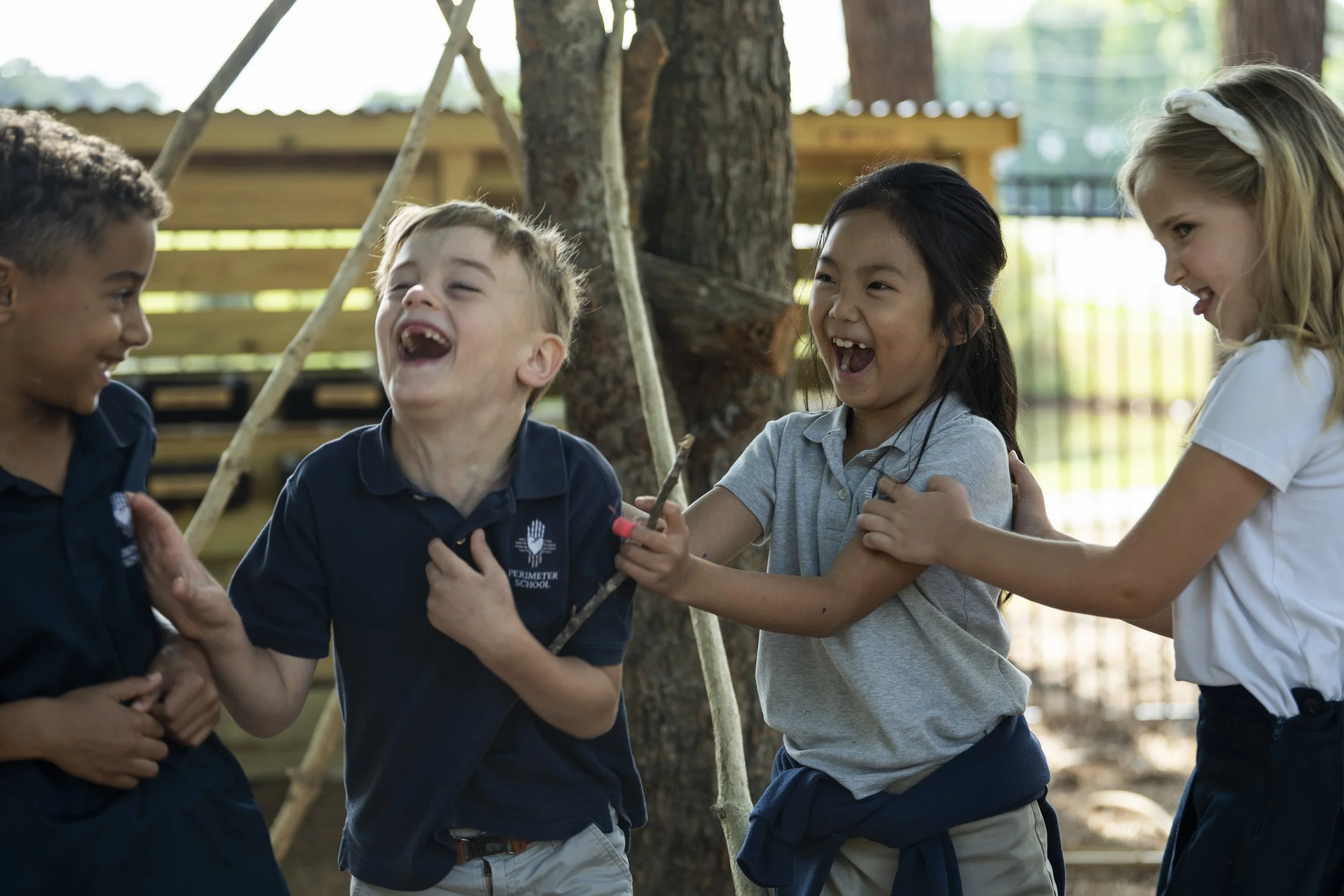
As they become intimate with creation, they come to know their Creator more intimately.
By: Britney Ray, Perimeter School Mom
“How much time daily in the open air should the children have? And how is it possible to secure this for them? … And long hours they should be; not two, but four, five, or six hours they should have on every tolerably fine day, from April till October.”
- Charlotte Mason
We become prepared by the quiet schooling of Nature to walk softly and do our duty towards man and towards God.
Nourishing Bodies and Souls
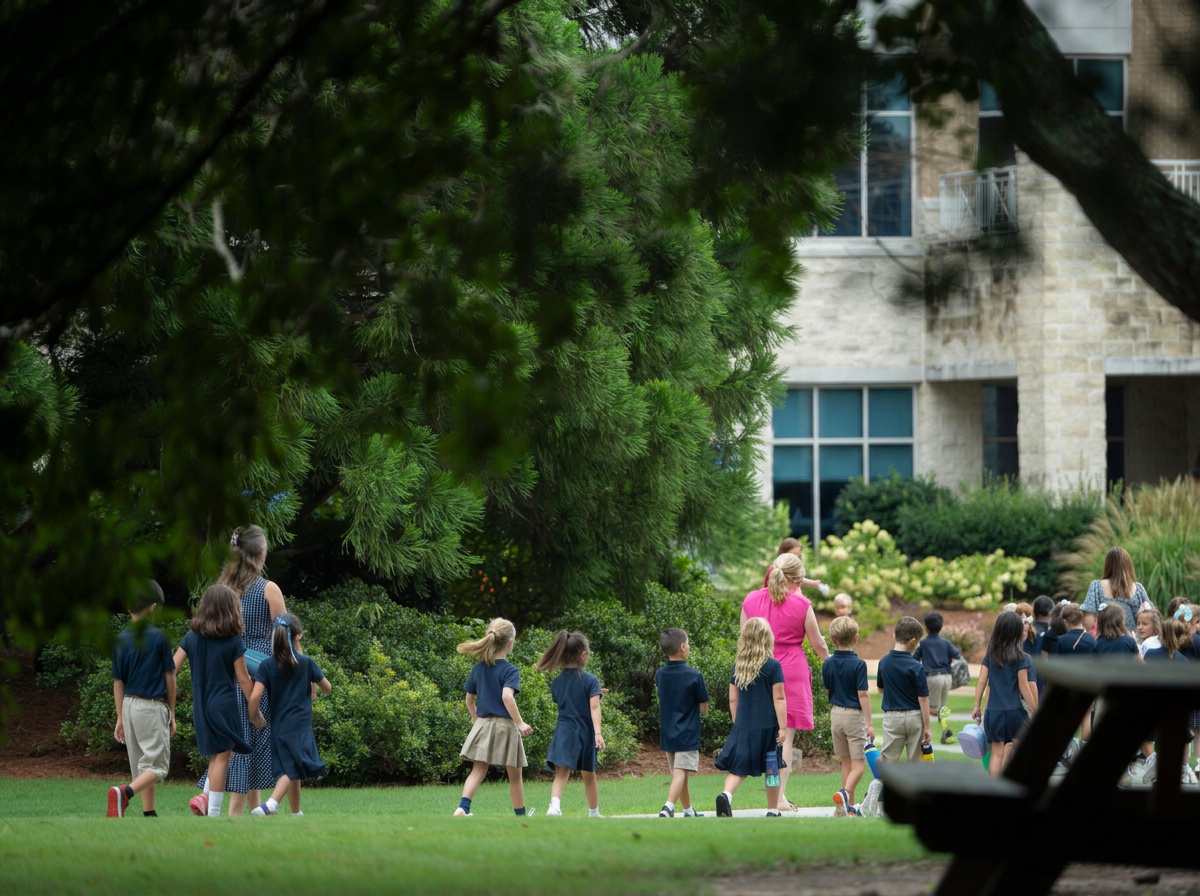
A Perimeter School parent noticed children on the periphery of the playground, neither engaging with the stationary equipment nor the sports turf. The question was asked, “What could we do for these children?” Thus, the idea for the Natural Playground was born.
For years, students made do with imaginative little nests of pine straw and gathered whatever leaves and berries their teachers would allow. Sticks and twigs were precious, rare commodities in the pristinely kept landscaping. Students would shed tears over a prized “cool stick” and even try to smuggle it back home. We realized that the wooded area of the playground would better serve the students if it were filled with loose parts, much more like a natural woodland.
The first pieces we brought in were a few huge boulders. Immediately, all grade levels flocked to them. Sometimes the boulders were a table for kindergartners sharing a meal of pinecones and mud; other times, they were a sunny spot for the eighth graders to rest and chat. Still other times, the boulders might be the scene of an epic battle or an operating table for an injured animal. The mere presence of a few boulders unlocked the imaginations of the students.
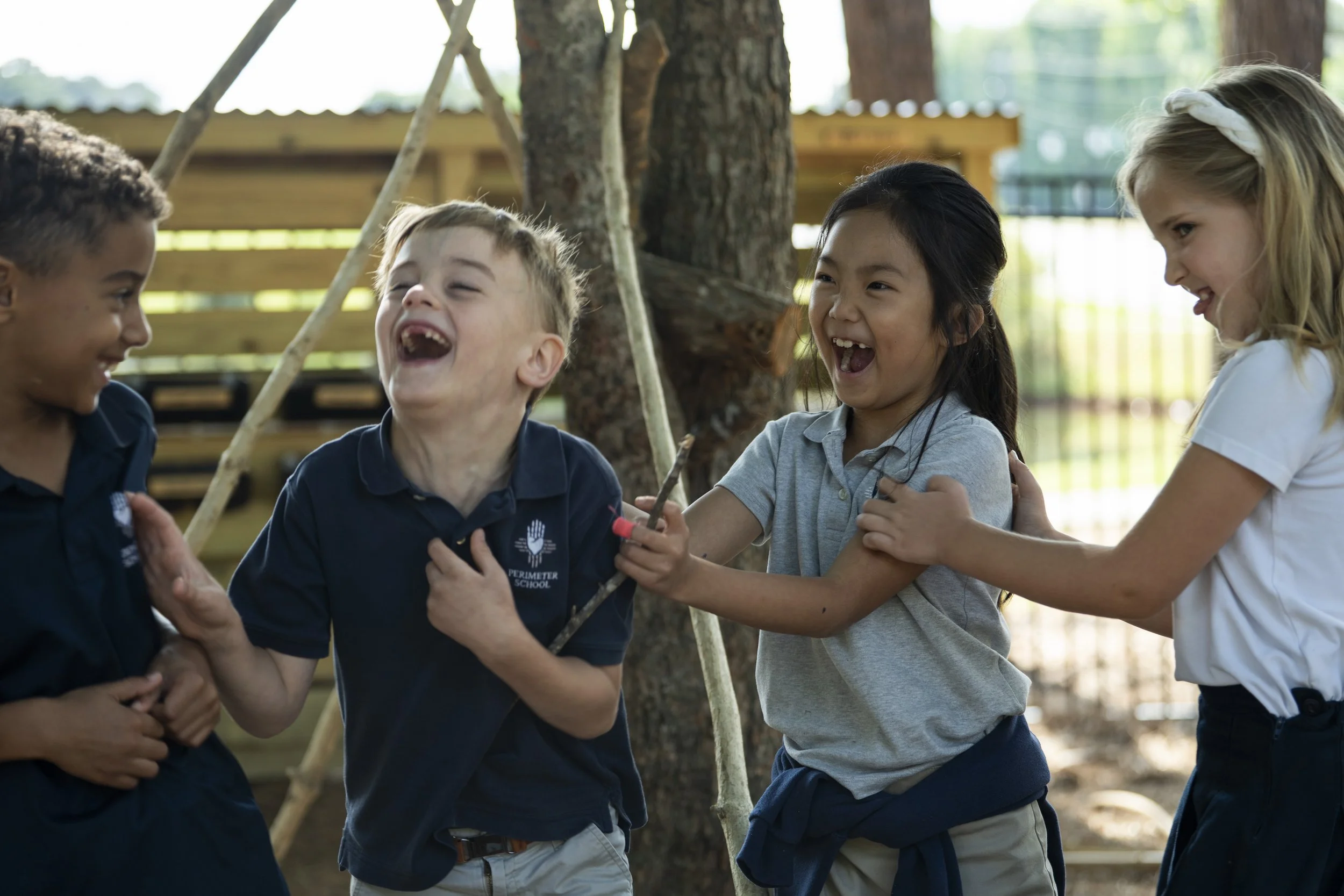
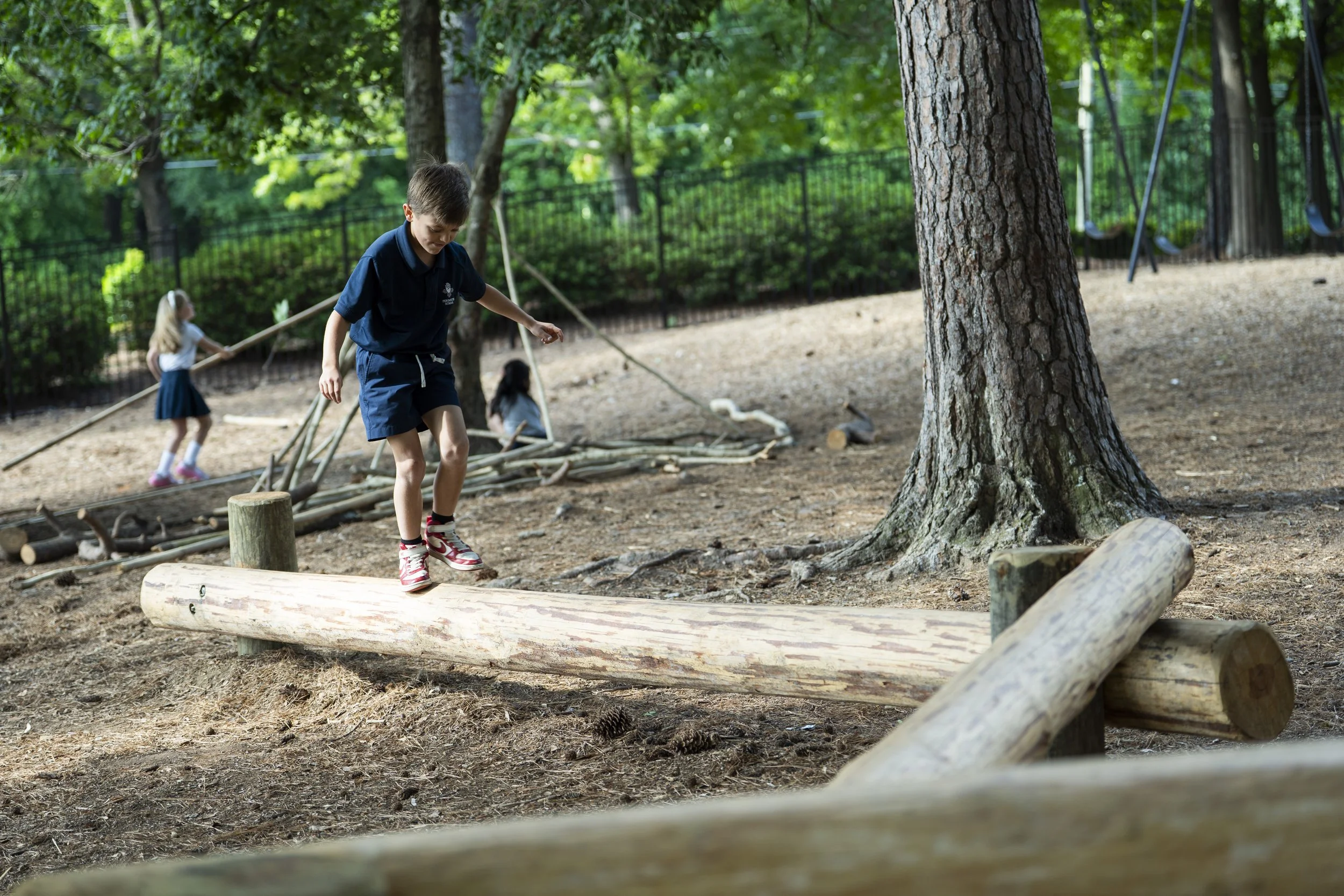
Later came the collection of large sticks, logs, wood disks, acorns, twine, and finally about 45 feet of balancing logs. The woodland is now a bustling place of fort-building, cooking, and pretend play. Students are engaging their cores, crossing the midline, lifting heavy loads, and moving their bodies in ways that they don’t get to in the classroom. They are practicing being aware of their surroundings and learning to work cooperatively with others.
When students have an opportunity to build and create something entirely new every day, they activate and build new pathways in the prefrontal cortex - the part of the brain responsible for executive functioning, decision-making, emotional regulation, and problem-solving. They strengthen these neural pathways as they negotiate rules or plan what to build next. In a world where every minute seems scheduled or led by an adult, finding ways for children to play this way is essential.
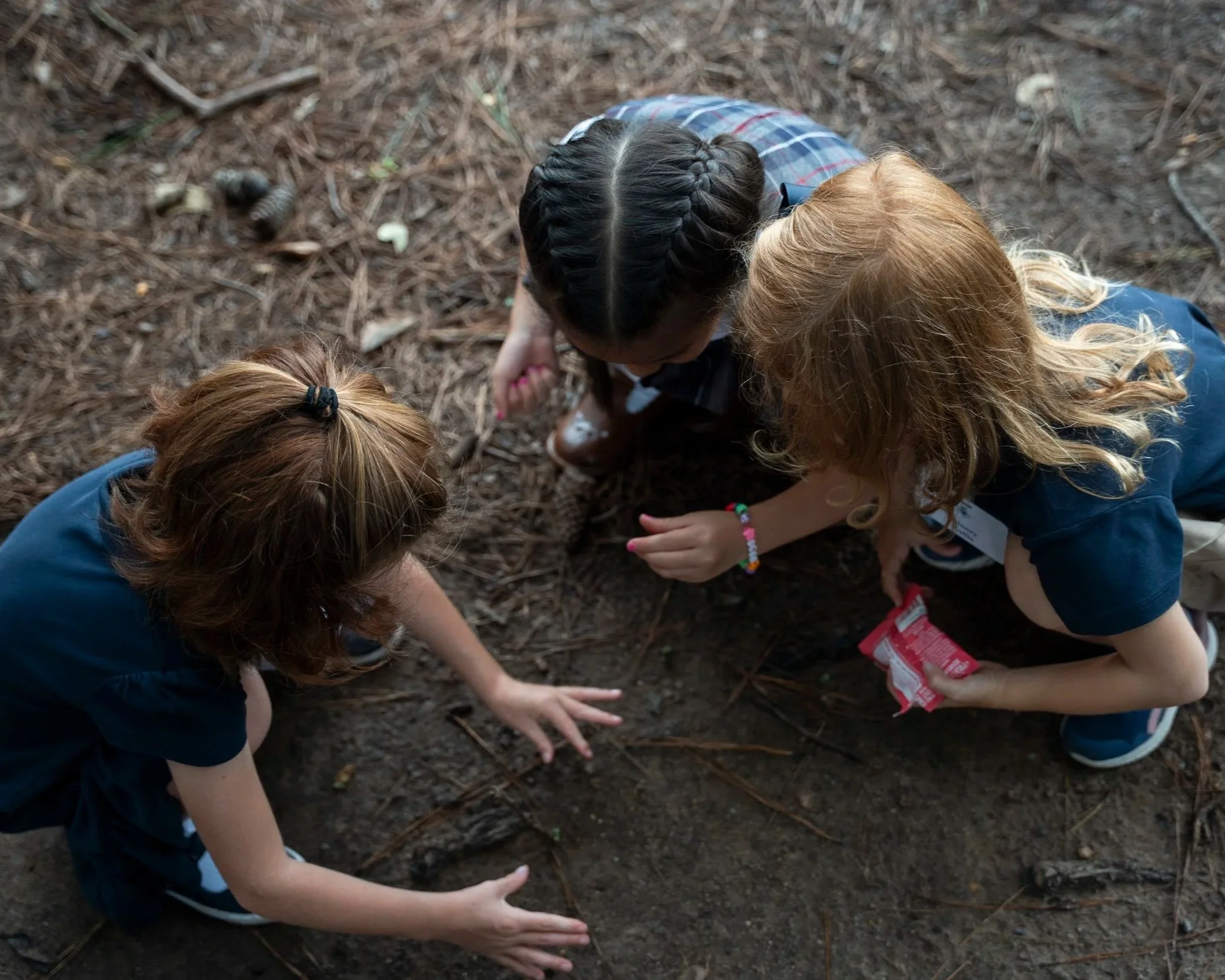
Children are natural scientists, endlessly curious and equally destructive. They dig in the dirt, peel bark from sticks, grind flower petals, and rip apart pinecones to see how they are made. Then, they use the pieces to decorate cupcakes. This is perhaps the most valuable part of the Natural Playground. As they become intimate with creation, they come to know their Creator more intimately.
The interaction with God’s creation helps to ground our children and feeds their souls. The smell of earth has been associated with positive physiological and emotional responses. Geosmin, a natural compound responsible for the distinctive smell of soil, is one reason the scent of wet earth is so recognizable. Just look up the benefits of smelling wet earth, and you may find yourself out there with the kids. It’s like God knew what we needed and put it out there in abundance. We just need to make sure to give our kids the opportunity to get a little dirty and risk a splinter or two.
“And this, not for the gain in bodily health alone - body and soul, heart and mind, are nourished with food convenient for them when the children are let alone, let to live without friction and without stimulus amongst happy influences which incline them to be good.”
- Charlotte Mason on children outdoors