Drawing Near: Why Art Education Matters
“Art reflects the artist, and both reflect God.”
By: Katy Southern, art teacher
“Draw near to God, and He will draw near to you.”
(James 4:8)
While this verse does not refer to literal drawing, it reminds us that when we slow down and give our attention to what is good, true, and beautiful, we are doing just that - drawing near. In the art room, students are invited to practice this kind of attentiveness as they learn to observe the world around them with care and intention.
Art education matters because it teaches students to truly see the world around them, the people in it, and themselves.
In the art room, students learn to slow down, pay attention, and notice color, shape, pattern, and detail. They develop patience as they work through challenges, perseverance when things do not turn out as planned, and humility as they try again. Art offers a meaningful way for students to express ideas and emotions that may be difficult to put into words, nurturing both confidence and empathy.
Scripture tells us that human beings are created in the image of God, the Imago Dei, and are therefore creative by nature. While not every student will develop the same artistic strengths, all benefit from learning to express the creativity they have been given. Some may be drawn to drawing, others to sculpture, design, or craftsmanship.
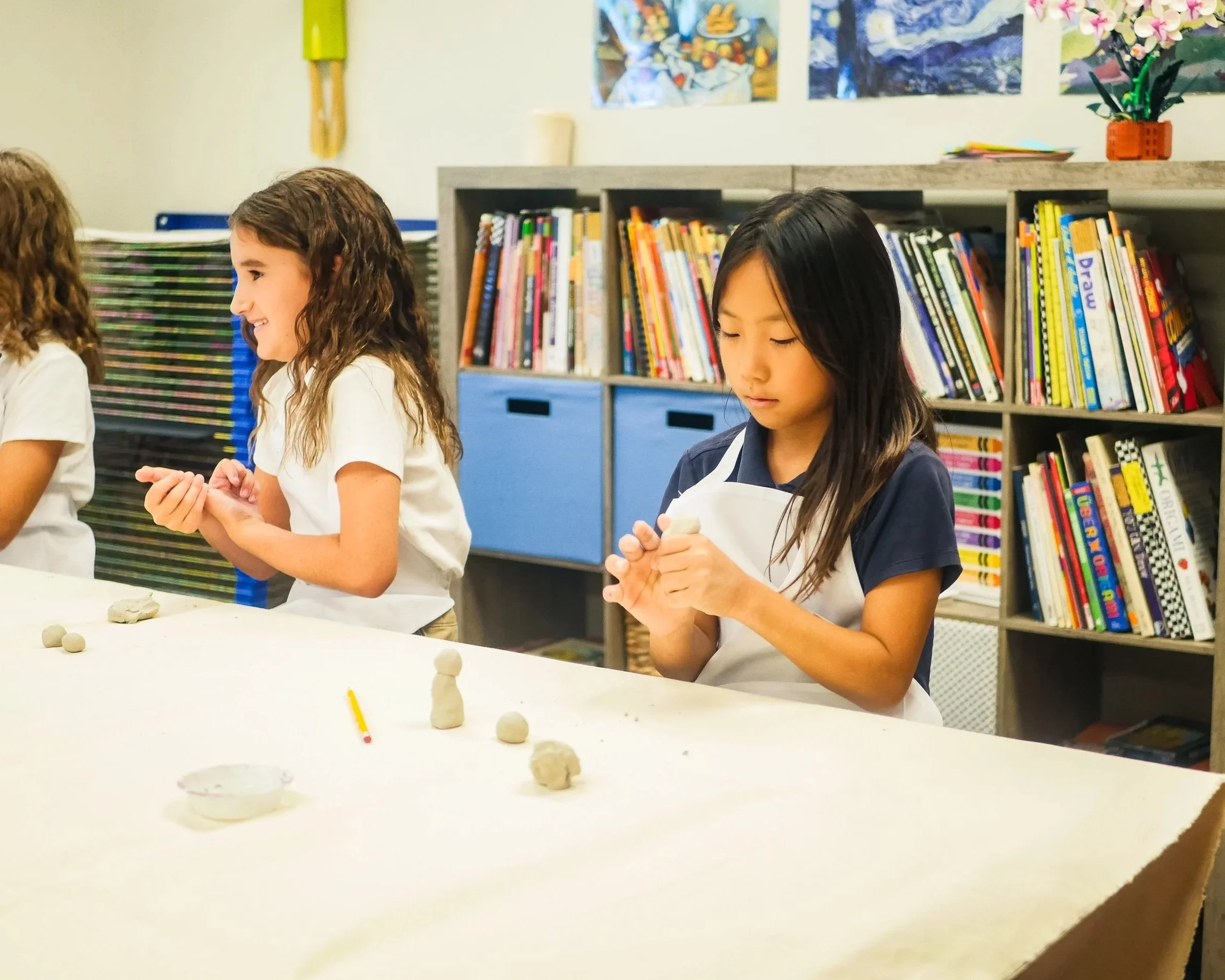
We work with a wide variety of materials, including clay, paint, colored pencils, and oil pastels. Not every student feels confident drawing, and that is okay. Some may discover they excel in sculpture, while others enjoy painting or mixed media. By exploring different processes and materials, students begin to understand that creativity can take many forms and that each person may find a unique way to express ideas and engage with the world.
As students learn the elements of art and develop technical skills, they become more effective in their expression. Just as a growing vocabulary allows a writer to communicate more clearly, an understanding of line, color, form, value, and composition equips students to communicate ideas, observations, and emotions with clarity and intention.
Education is the science of relations
Currently, students are studying the work of Alma Thomas and exploring abstract expressionism through color and pattern. They are also creating clay mugs, functional vessels that must balance both beauty and usefulness. These projects invite students to think carefully about artistic intention, craftsmanship, and design, recognizing that both expressive artwork and functional objects hold value and meaning.
Charlotte Mason believed that education is an atmosphere, a discipline, and a life, and that children grow through living ideas and relationships with what is good, true, and beautiful. She wrote, “Education is the science of relations.” Art education invites students into relationship with the created world, with the work of others, and with their own creative capacities.
Pursuing the Good, the True, and the Beautiful
The Good: Students learn to extend patience and kindness to themselves and others in the creative process.
The True: They observe carefully and represent the world with honesty and wonder.
The Beautiful: They respond to and reflect the beauty of God’s creation.
As one student recently shared, “Art reflects the artist, and both reflect God.”
Along the way, students often discover something more: creating is joyful. Working with their hands, experimenting with materials, and bringing an idea to life is not only meaningful but also fun. There is real delight in making something that did not exist before.
Art education is not simply about making things. It is about forming students who are attentive, thoughtful, and equipped to engage the world with wisdom, compassion, imagination, joy, and delight.